
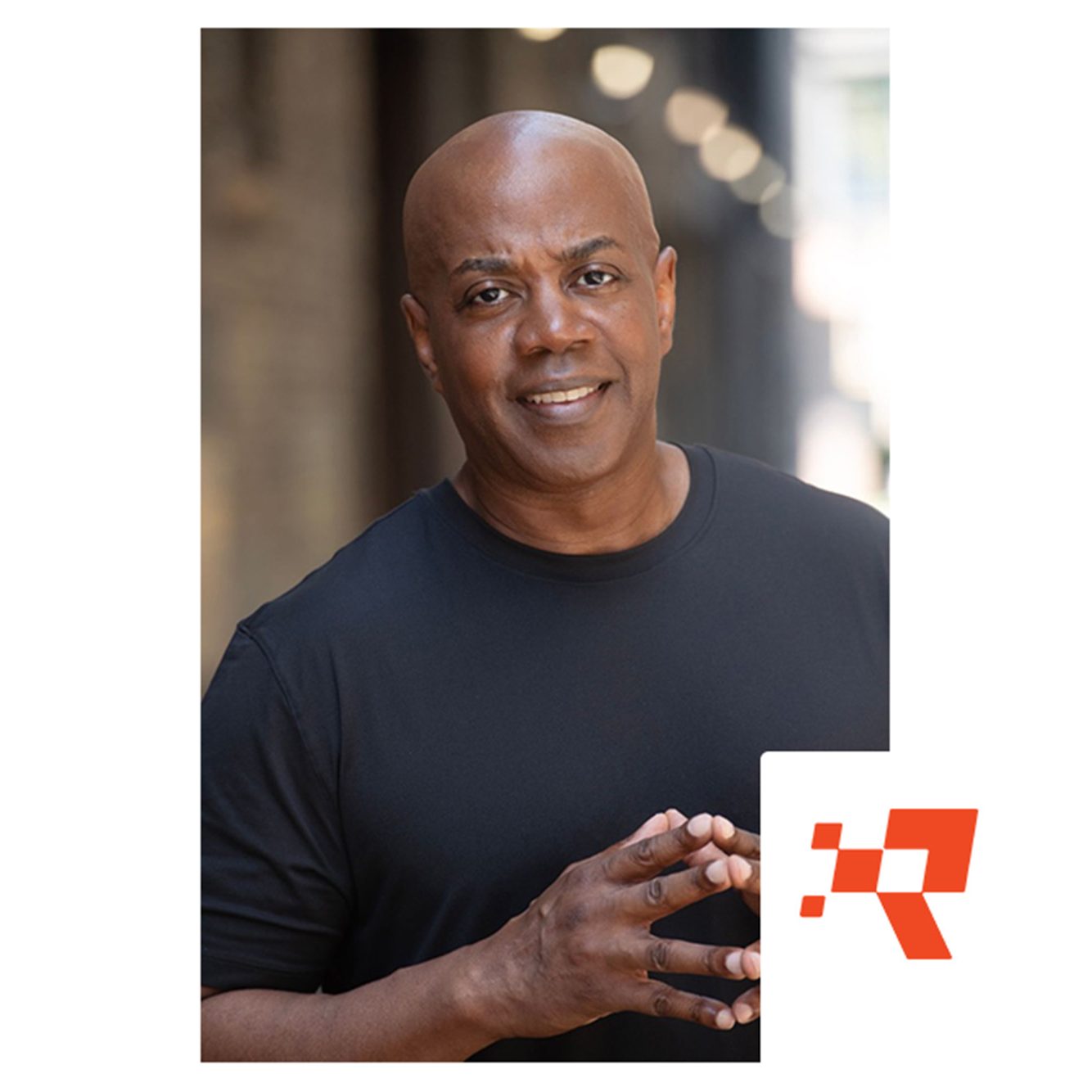
Welcome to Rational Future: A Letter From the Founder
One of my earliest memories is the starship Enterprise streaking across the stars on a TV screen. I was very young — but the image lodged in me immediately, and I knew exactly what I was feeling: I was watching something epic and hopeful. A picture of what we might become.
Maybe you have a memory like it too. Star Trek showed a whole generation a version of humanity that had grown up — that had outlived its worst instincts and gone out into the universe with reason, courage, and conscience. To a lot of us, it was never just television. It was a roadmap.
That map had a maker. Gene Roddenberry built Star Trek not as a fantasy based on ray guns and monsters, but as an argument — that humanity could choose to grow up, to trade fear and tribalism for curiosity, cooperation, and competence. He slipped that optimism into prime-time television and dared a nation to believe it. Everything I’m doing here begins with the debt I owe that idea, and the man who had the vision to put it on the air.
Sixty years later, I look around and I no longer see us heading toward that world of tomorrow . We are further from that future today than the day the show first aired — and what unsettles me most is how few people are asking why. We’ve handed our attention to machines built to capture it. We reward the loudest voices instead of the clearest ones. We’ve let the hard, patient work of thinking get drowned out by outrage that’s easier to feel and cheaper to sell.
I don’t believe the problems in front of us are left or right. I think that framing is part of the trap. The retreat from reason, the attention economy, the race to build artificial intelligence we don’t yet understand, the long shadows of nuclear war and a changing climate — these are not partisan problems. They’re human ones. And they won’t be solved by algorithms, outrage cycles, or the loudest person in the room. They’ll be solved by people who can still think critically, reason honestly, and build something collectively.
That’s why I built Rational Future.
It’s a home for people who refuse to surrender our future to cynicism. At its center is Rational Books, where I write and publish nonfiction and speculative narratives about science, civilization, and the choices we’re making right now — starting with A Future Askew, with more to come.
Two more projects are on the way, Rational Talk, a series of filmed conversations with the thinkers, scientists, and storytellers working on these problems, and Rational Live, which will carry those conversations to stages and audiences in person. I don’t claim to have all the answers. But I’m going to do everything I can to help turn the tide — and I’m genuinely excited to try.
While Roddenberry gave me the destination, Carl Sagan gave me a way of thinking that could get us there. When I was young, Sagan stood in front of a camera and did something rare: he made reason feel like wonder. He treated his audience as curious and capable, asked us to see our small blue world as something worth protecting, and showed that science and hope belong in the same breath. I’ve never forgotten it. If Rational Future has a spirit, it belongs to both Roddenberry and Sagan— clear-eyed about the dangers, but never willing to give up. Yet, wonder alone changes nothing. I’d like to carry that torch forward, and put it to work. What I hope to add is action.
I began this project with A Future Askew because it makes the case the rest of this venture rests on. Each essay opens with a piece of original fiction — a short story set a little further down the road we’re already on — then steps back to examine the real forces behind it: artificial intelligence, the attention economy, the erosion of reason, and the long-term risks we’d rather not look at. It’s part warning and part reckoning, but beneath it is an act of hope — the conviction that naming the drift honestly is the first step to reversing it.
If I’m going to ask anyone to think and then act, I owed it to you to go first. The timing is deliberate, as well: this September 8th marks sixty years since Star Trek first aired, and there’s no better moment to hold that promise up against the world we’ve actually built — and to ask, without flinching, how far we’ve drifted, and how we find our way home.
I should be honest about where I stand. You won’t be able to place me on the usual map of left and right, and I stopped looking for my spot on it long ago. What moves me lives beneath that map —civilizational and non-partisan. I’m less interested in who wins the next argument than in whether we’re still the kind of species capable of having one — of looking at a challenging problem together and choosing curiosity over fear. That’s the muscle I think we’re losing. This is my attempt to help us rebuild it.
I’m not naïve about optimism. The belief that it’ll all work out somehow is the very thing that keeps our hands in our laps while the clock ticks. That’s not what I’m offering. The optimism I believe in is the kind you have to act on. The future doesn’t arrive because we once imagined it on a screen. It arrives only if we climb toward it — deliberately, together, starting now.
So welcome. If you’ve ever felt like the conversation got smaller than the moment we’re living in — if you still believe curiosity can outrun fear, and that we were meant to become something better — then you’re already one of us. Pull up a chair. There’s real work to do, and I’d rather do it with you.
A Future Askew arrives in a special Star Trek 60th Anniversary Edition this August, with the general release to follow in November. And this is only the beginning — on September 8th, the anniversary itself, I’ll be launching a Kickstarter to help bring this vision further to life, and I’d love for you to be part of it from the ground floor.
Let’s think, and then let’s build.
— Jeffrey Morris
Founder, Rational Future